GyroSpinner
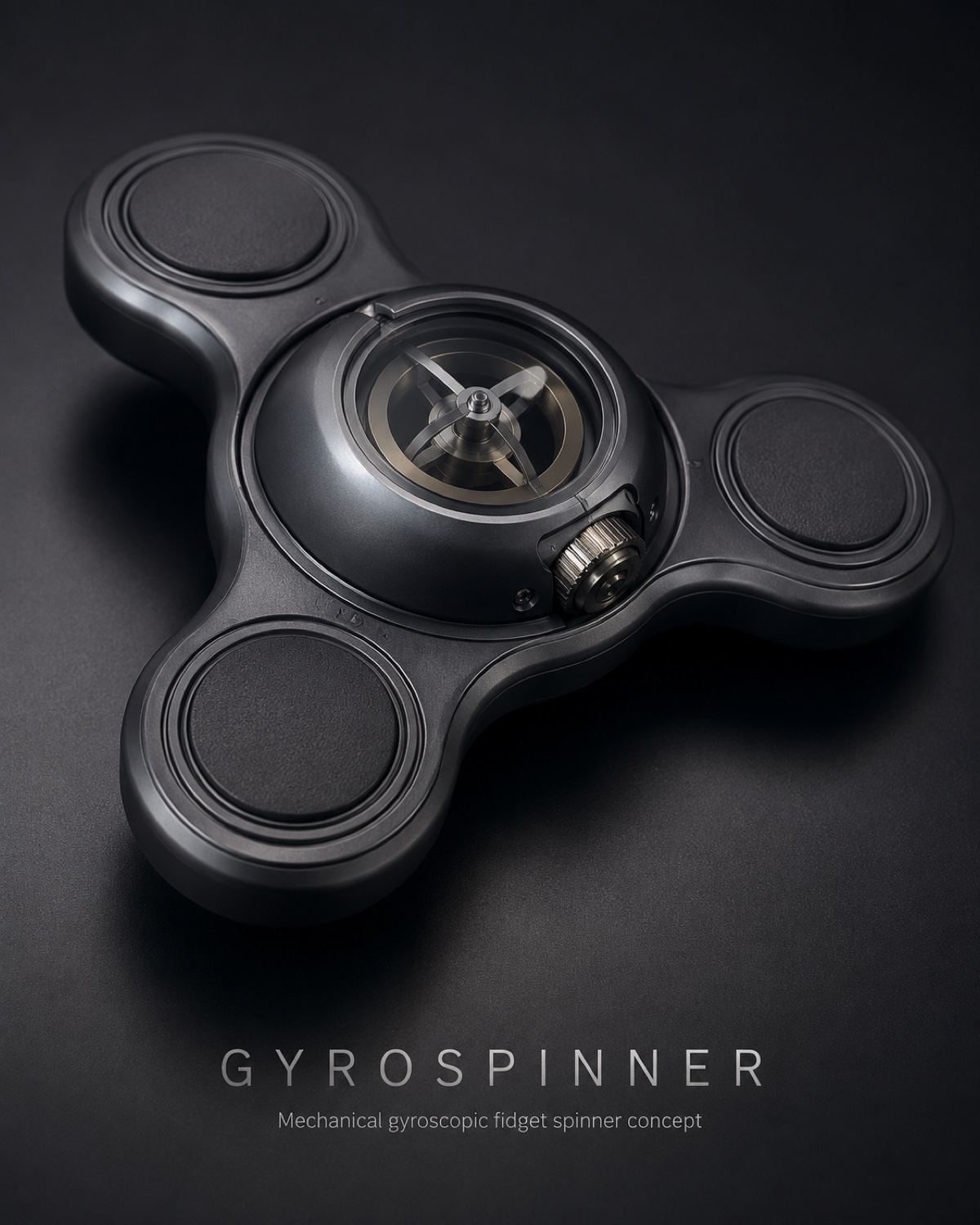
GyroSpinner is my own mechanical product concept: a fidget spinner with an internal rotor that is mechanically spun up to add gyroscopic stability. I took it from a first idea to digital product visualisations and physical, 3D-printed prototypes, combining product design, mechanical problem-solving, AI and hands-on prototyping.
- Year
- 2026
- Status
- Prototype
- Stack
 Bambu LabBambu Studio3D modellingGenerative AI
- What I built
- Everything: the concept, the mechanical problem-solving, the CAD, the 3D-printing workflow, and the iteration from digital model to physical prototype.
Background
The problem
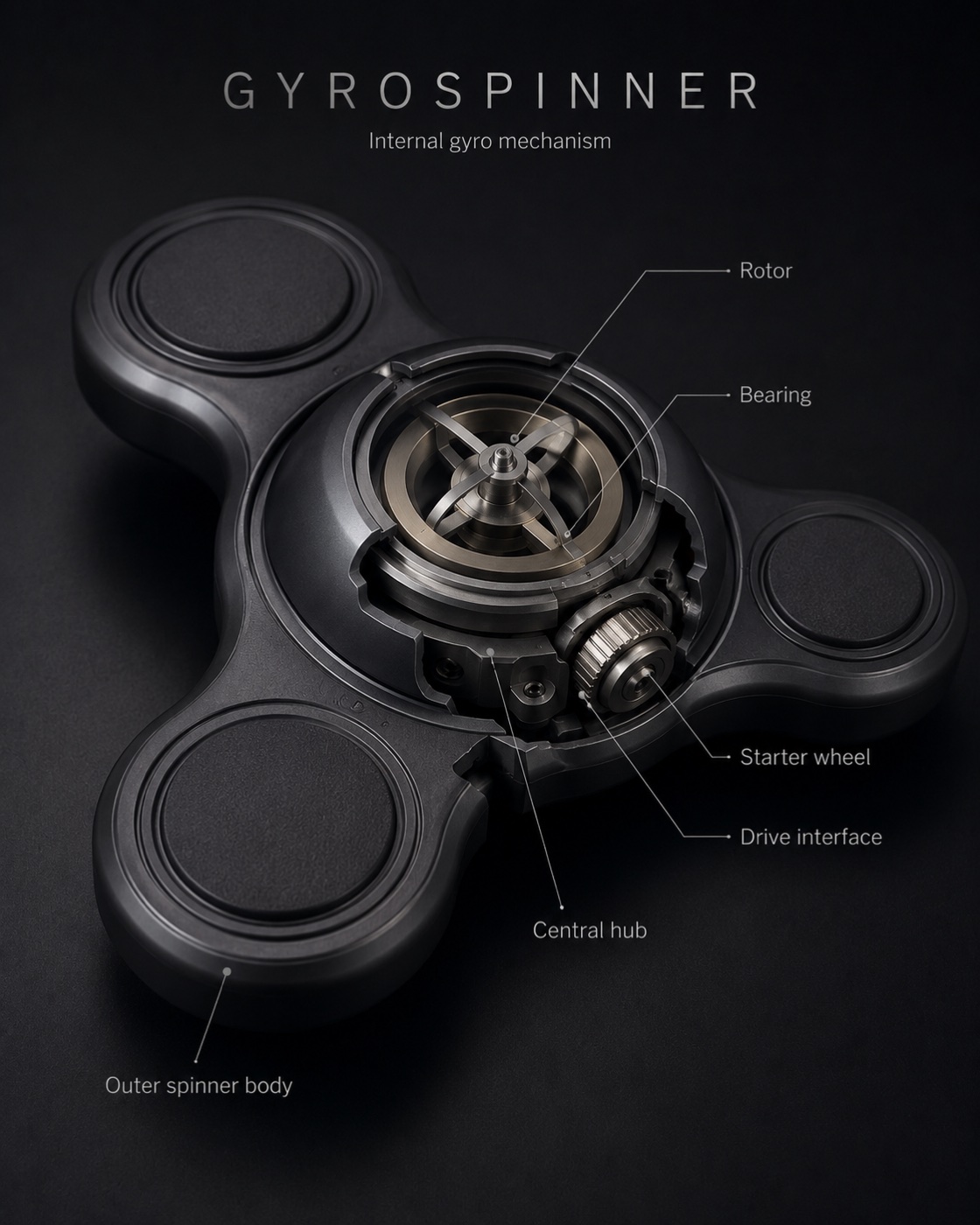
Turning a novel mechanical idea into something real is the hard part. A fidget spinner with an internal gyroscope needs a rotor, bearings, an axle and a mechanical starter that work together, stay balanced and ergonomic, and still fit in the hand, all with no battery or electronics.
The idea
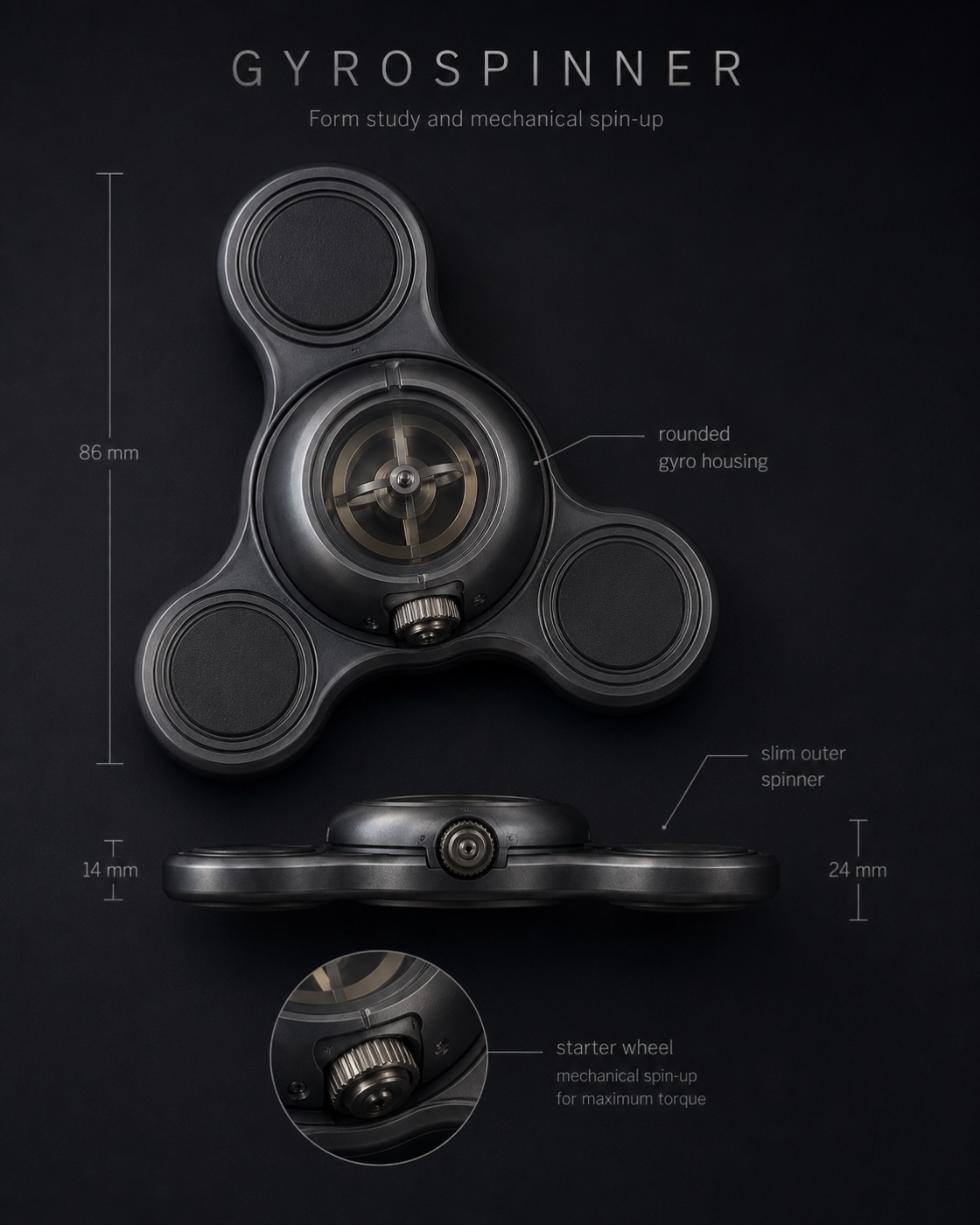
Build on the familiar fidget-spinner form but give it a larger, rounded centre to house a rotor that is mechanically spun up for gyroscopic stability, then prove it with real, printable, testable prototypes.
Key decisions
- Decision 1
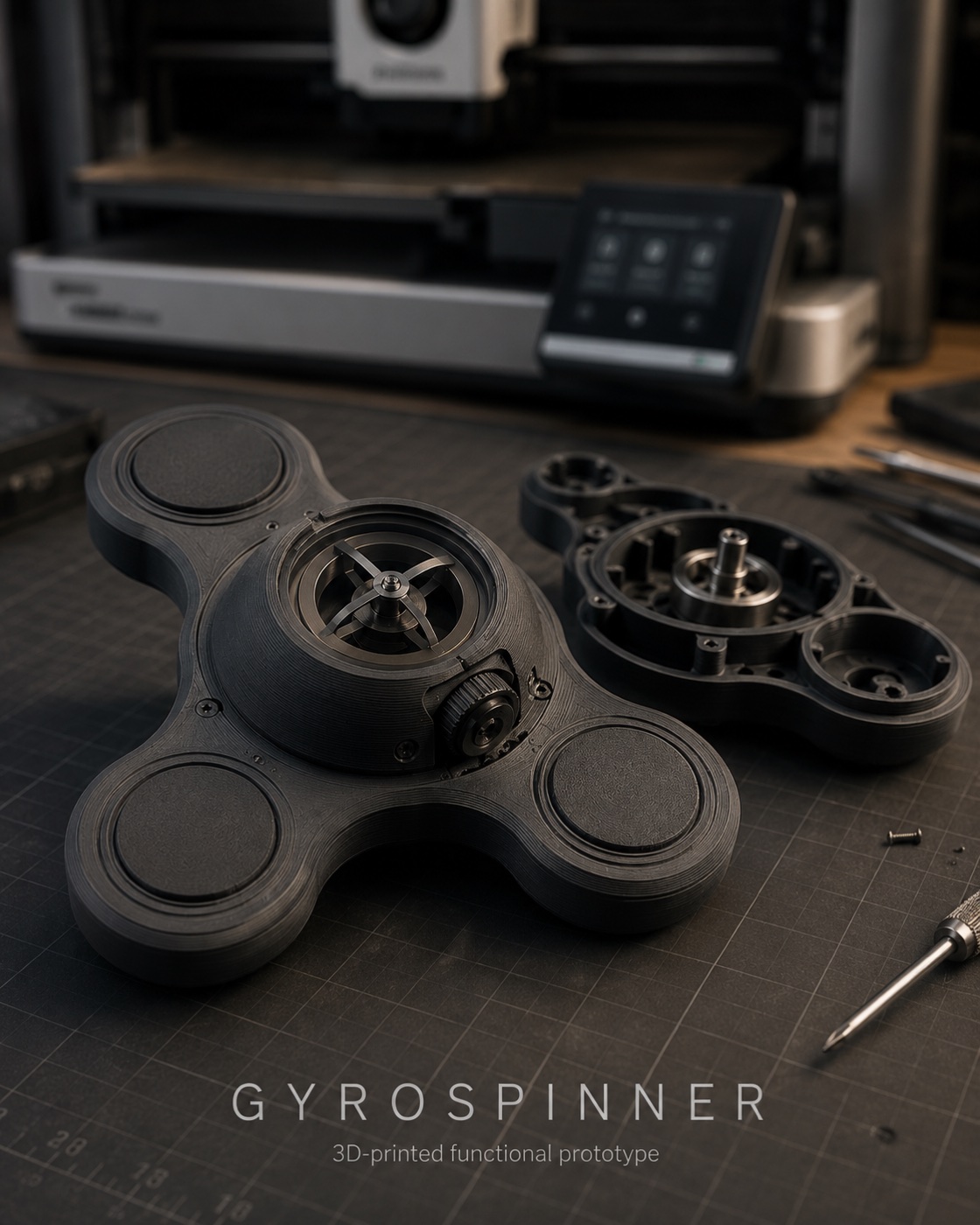
Prove it physically: prototypes to find real problems, not just pretty renders.
- Decision 2
Keep the classic spinner feel despite the bigger gyro housing.
- Decision 3
Judge AI suggestions critically: buildable beats merely good-looking.
How I built it
- 01
Explored how the rotor could be placed, accelerated and stabilised without electronics.
- 02
Modelled the parts in CAD with real dimensions, tolerances and fits.
- 03
Sliced and printed on a Bambu Lab printer, tuning orientation, supports, layer height and infill.
- 04
Tested each print for fit, balance and ergonomics, then remodelled and reprinted.
What came of it
What I learned
- There is a real gap between a design that works in a render and one you can actually print, assemble and use.
- AI is powerful for research and visualisation, but the engineering judgement has to be yours.
- Hands-on printing taught me tolerances, fits and the full CAD-to-print workflow.
Next steps
- Refine the starter mechanism and bearing fit toward a reliable spin-up.
- Open to a collaborator: I would love a mechanical engineer or maker to help take GyroSpinner to a finished product.
Business potential
More a proof of range than a business yet: it shows I can take an unproven hardware concept from idea to a physical prototype. I am actively looking for a co-builder to finish it.
I'm looking for a mechanical engineer or maker to help take GyroSpinner to a finished product.
Happy to walk through the thinking, the trade-offs and where it's headed next.
Get in touch